




Podcasts
Watch videos featuring supply chain experts




End-to-end compliance automation across classification, screening, and duties.







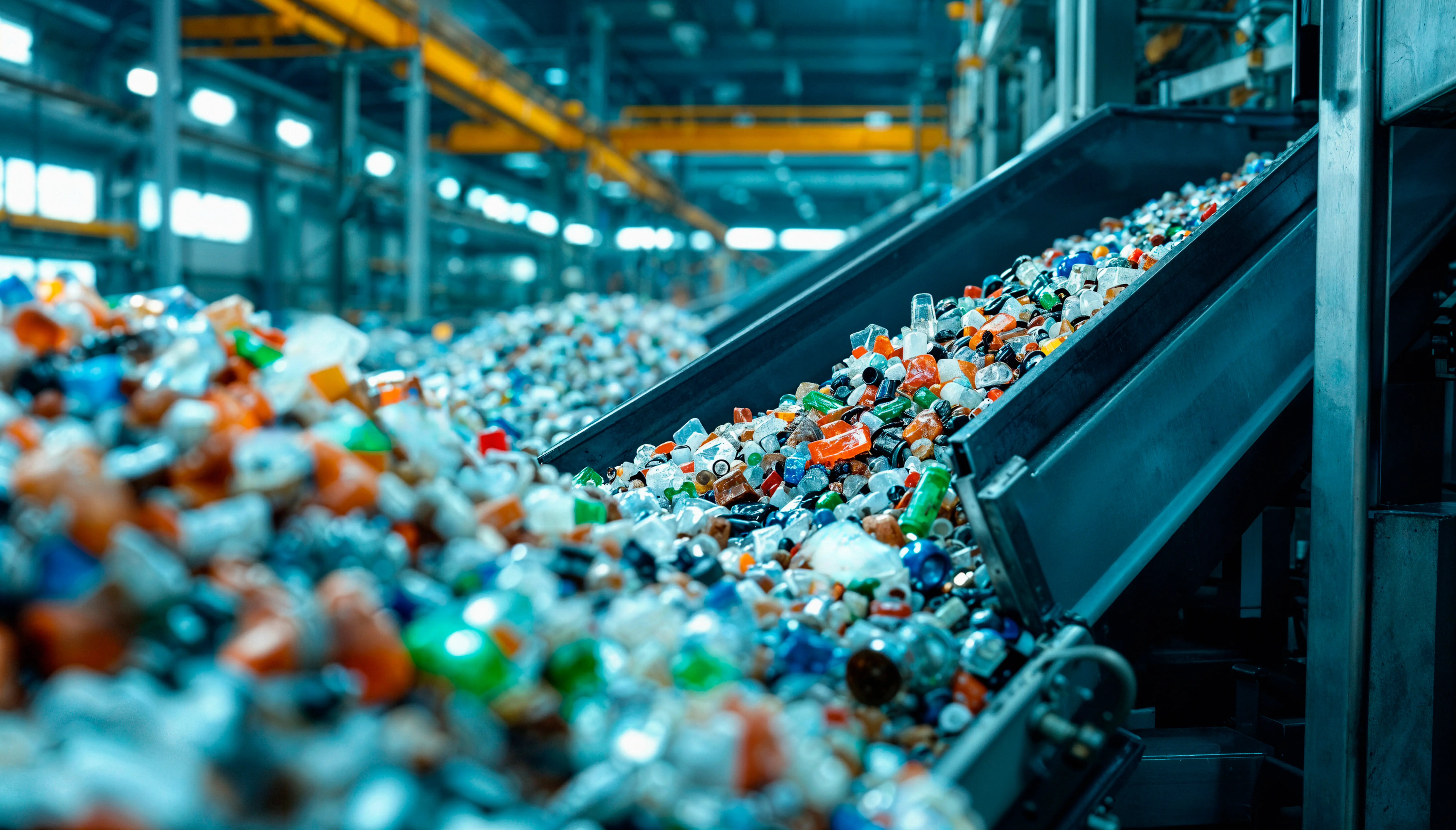


The chokepoint everyone watches for oil quietly carries almost half the world's polyethylene exports. If you buy resin, or any material that leaves the Gulf, here is how to find alternative manufacturing suppliers and keep the closure from taking your production line down with it.
Roughly 84% of the Middle East's polyethylene capacity has to sail through one narrow strip of water to reach the rest of the planet. That figure comes from ICIS, and the strip of water is the Strait of Hormuz. Since late February 2026, it has been effectively closed.
You have probably seen the headlines. They are all about oil: barrels, Brent crude, prices at the pump. Fair enough, that is the big macro story. But if your job is keeping resin flowing into a plant, the oil angle is a distraction. The story you actually need to care about is the one nobody is putting on the front page. The world just lost access to its single biggest source of polyethylene, and there is no clean way around it.
Here is the shift underneath all of it. The teams that ride out a closure like this do not solve it with spreadsheets and phone calls. They rely on procurement intelligence, supplier discovery, and AI-powered sourcing platforms to see their real supplier exposure before a crisis escalates. Strategic procurement stopped being about squeezing a lower price a while ago. It is about building a resilient sourcing network before the disruption lands, which is exactly the job platforms like Source Atlas were built for.
Let me walk you through why this is worse than it looks, and, more importantly, what you can actually do about it starting this week. Treat it as a strategic sourcing problem before a purchasing one, and it becomes something you can manage instead of something that manages you.
Most people think of the Middle East as the world's gas station. It is also the world's plastics factory.
The region is the largest exporter of polyethylene on Earth. In 2025 it shipped roughly 18.7 million tonnes of the stuff, about 43% of everything traded globally, according to trade-flow data from International Trader Publications. Saudi Arabia alone sits on around 10.5 million tonnes of PE capacity, most of it packed into the Jubail complex on the Persian Gulf, per Argus figures. Add in serious volumes of polypropylene, methanol, and the ethylene glycol that PET depends on, and you start to see the scale of what runs through this one waterway.
Now here is the part that makes Hormuz different from every other disruption you have managed.
When the Red Sea got dangerous, ships went the long way around Africa. Expensive, slow, annoying, but possible. Hormuz does not offer that mercy. The resin is made inside the Persian Gulf. You cannot load it somewhere else, because there is nowhere else. A ship cannot take the scenic route out of a bathtub with one drain.
So when the drain closes, it does not trim your Gulf supply. It cancels it.
And it gets narrower still. One UAE port operated by DP World, Jebel Ali, handles roughly two-thirds of the region's polymer exports, about 65%, by DP World's own account. A lot of the world's plastic is riding on a very small number of berths. For anyone running global sourcing at scale, that concentration is the entire risk in a single sentence.
You might be thinking, "Fine, but I do not buy from Saudi Arabia." Are you sure? This is the trap. Most teams know their resin distributor. Very few know where that distributor's pellets were actually made, and almost nobody knows the feedstock behind that. So you can run a supplier list with zero Gulf names on it and still be completely exposed, because two tiers down, a big chunk of your material was loading in Jubail all along. Without real supply chain visibility below your direct vendors, that exposure stays invisible right up until it becomes a stockout.
THE PATTERN MOST TEAMS MISS: Teams that depend on a single sourcing region for a critical grade tend to recover far more slowly from a shock than teams spread across three or more, and most procurement leaders underestimate how much of their Tier-2 supply quietly traces back to the same origin. Shipment-level trade data is usually the first place that hidden overlap becomes visible.
The closure does not care what your PO says. It cares where the boat left from.
Disruptions like this follow a rhythm. Knowing it tells you where to spend your energy.
Prices go vertical. In the opening stretch of this closure, US contract polyethylene climbed by around 45 cents a pound as everyone lunged for the same replacement tonnes at once, according to Argus. If you were slow, you paid up. If you were really slow, there was nothing to buy.
Over the next few months, freight costs begin to escalate significantly. Even the cargo that can still move gets punishing. Rerouting around the Cape of Good Hope adds up to two weeks of transit, and then the surcharges pile on: war-risk, emergency bunker, general rate increases, the whole menu. And honestly, freight is not even the killer. Insurance is. The moment underwriters walk away, a shipment is dead on the water no matter what the law says about your right to sail.
By mid-2026 things had calmed a little. US and Asian supply soaked up some of the shock and prices came off their April highs. But do not mistake that for "over." Here is the insight most people miss. Even if Hormuz reopened tomorrow, your resin still would not show up for months. Gulf officials have said it would take months just to restart production and export logistics, and analysts at Syntex have modeled that material from a reopened strait would then need close to a year to actually reach converters. The disruption outlives the news cycle. Plan for that, not for the ceasefire headline.
Enough doom. Here is the playbook. Run these at the same time, not one after another, because you do not have the luxury of sequence.
You cannot re-route what you cannot see. Before you chase a single new supplier, map your material back to the plant and the port it ships from, and go below Tier 1, because that is where Hormuz is hiding. This is where supplier mapping, multi-tier supply chain mapping, and trade intelligence tools earn their keep. Pull the customs and shipment data and let it tell you the uncomfortable truth about how much of your resin traces to one Gulf terminal. "We do not buy from the Middle East" and "40% of our film-grade traces to Jubail" are very different sentences, and only one of them is true.

Nothing replaces 43% of global exports in one move, so when you set out to find alternative manufacturing suppliers, stop looking for a hero supplier and start building a bench.
US Gulf Coast is your biggest low-cost option, and it held up well through the crisis. New capacity is landing too. The Chevron Phillips and QatarEnergy joint venture, Golden Triangle Polymers, is spinning up around 2 million tonnes of export HDPE in Orange, Texas, by mid-2026, per Argus. One catch: Brazil imposed anti-dumping duties on US and Canadian PE in 2025 (about 199 dollars a tonne on US resin and 238 on Canadian), so US material cannot economically go everywhere. Check the lane before you commit.
Southeast Asia, meaning Thailand, Vietnam, and Malaysia, is restarting close to 1.9 million tonnes and increasingly plays swing supplier for Asian buyers.
India has growing capacity, but its west-coast ports, Mundra in particular, got badly congested during the crisis, with reported delays of up to 49 days. Verify lead times. Do not assume them.
Russia and the CIS offer cheap volume for an obvious reason: sanctions discounts. New capacity like SIBUR's Amur complex is targeting South and Southeast Asia. That can lower your landed cost, but it comes with compliance, reputation, and payment baggage that has to clear legal before it goes near your approved-vendor list. Cheap resin is not cheap if it blows up your risk profile.
Western Europe and Egypt cover specific grades at higher cost. Fine as backup, not as your anchor.
Speed is where quality goes to die. Unfamiliar suppliers bring grade-consistency risks you did not have when your sourcing was boring and stable. So compress the process without gutting it. Pull a certificate of analysis, run a qualification lot on your actual tooling (nominally identical grades behave differently across producers), and verify the supplier's real capacity through third-party trade data rather than their sales deck. That last step is supplier intelligence in the practical sense: real evidence, not a pitch. Supplier discovery platforms that score financial health, capacity, and shipment history let you shortlist real producers in days instead of cold-emailing strangers and hoping.
The tighter your spec, the fewer suppliers can help you. Get engineering and quality to pre-approve substitute grades now, while it is calm, so a closed door means switching to a qualified alternative instead of kicking off an eight-week change-control scramble in the middle of a stockout.
Right supplier, wrong logistics, same stockout. Lock short-term freight rates to blunt the spot-market spikes. Ask your forwarder about alternative transshipment hubs. Hold a sensible buffer on your most Hormuz-dependent grades, enough to bridge a re-qualification window, not so much that you have parked your working capital in commodity pellets whose price might drop next month.
Disruptions travel in packs. That safe alternative corridor you set up in month one can close in month six when new duties or tariffs land. The trade lane you re-routed to the US might get hit with anti-dumping action, as Brazil has already shown. Keep an eye on trade policy, not just supply. This is the unglamorous core of supplier risk management: the second punch is usually the one that connects.
Procurement leaders do not have weeks to manually research suppliers while a line is starving. Procurement AI lets sourcing teams analyze supplier relationships, shipment history, pricing, tariffs, and geopolitical risk in minutes instead of days. Here is the workflow it compresses, step by step.
Ask which of your suppliers are exposed. Trace every critical material back through its tiers to the origin plant and port.
Discover manufacturers outside the affected region. Let supplier discovery surface verified producers of your exact grade in markets that are still moving.
Compare sourcing countries on landed cost, real capacity, and honest lead time, not the numbers on a sales deck.
Evaluate tariffs and trade actions on every candidate lane with tariff intelligence, so a cheaper origin does not turn expensive at the border.
Screen supplier risk and sanctions exposure with supplier risk management before anything reaches your approved-vendor list.
Shortlist qualified alternative manufacturing suppliers, with an AI assistant like Hermes AI doing the first pass so your team reviews a shortlist, not the whole world.
Continuously monitor exposure as the situation moves, so round two reaches you before it reaches your line.
That is the point where procurement AI becomes a competitive advantage rather than another tool in the stack. It is also, in practice, the only way to find alternative manufacturing suppliers fast enough to matter when the clock is a production schedule.
Everything above comes down to two things: how fast you can see your exposure, and how fast you can find a way out. That is it.
This is where global sourcing risk management software actually matters, not as a magic button, but because when a chokepoint slams shut, willingness to act was never your problem. Speed was. The category has a clearer name now: AI procurement, where procurement analytics and procurement intelligence turn raw shipment and customs data into a shortlist you can act on the same week.
Here is the uncomfortable pattern. Gartner has found that only about 7% of supply chains can make decisions in real time. And in a separate McKinsey survey published in late 2025, the share of companies planning major digital supply-chain investments actually fell, from 47% to 25% in a single year, even as the disruptions got worse. Suez. Panama. The Red Sea. Now Hormuz. Same lesson every time. The companies that come out standing are the ones that bought the visibility before they needed it, not the ones frantically buying it at 2 a.m. during the crisis.
Hormuz is not a one-off. It is the clearest example yet of where the procurement trends 2026 conversation is heading. For a decade, sourcing was optimized for a single number: unit cost. The single-region, lowest-price supply base looked efficient right up until a chokepoint closed and it produced nothing.
The shift now underway is from cost optimization to resilience by design. Strategic procurement teams are building multi-region global sourcing benches, writing real disruption clauses into contracts, and standing up the visibility to see exposure two and three tiers deep before it turns into a shortage. The crisis did not create that shift. It made ignoring it impossible.
The buyers who treat this closure as a one-time fire drill will do it all again at the next chokepoint. The ones who treat it as the moment to rebuild how they source will not.
Treat this as a supply chain disruption mitigation plan you can run on a clock.
This week: map your Hormuz exposure, check your inventory coverage, lock freight rates, and start conversations with US Gulf, Southeast Asian, and Indian suppliers. This month: run qualification lots from two regions, pre-approve substitute grades, and pressure-test landed cost including duties.
This quarter: split your volume across a real portfolio, stand up ongoing monitoring in your procurement software, and write the playbook down, so the next chokepoint is a process and not a panic.
Which resins get hit hardest? Polyethylene and polypropylene, because the Gulf dominates PE exports and makes a lot of PP. PET takes an indirect hit through disrupted glycol and methanol. Can Gulf resin sneak out another way? Barely. A little eastern Saudi volume can go overland to Red Sea ports, but the vast majority has no alternative to Hormuz. That is exactly why resin gets hurt more than most cargo.
Is US resin a full replacement? No. Nothing replaces 43% of global exports single-handedly. But the US Gulf Coast is the biggest, cheapest backstop, as long as duties and freight math work for your destination.
How long after a reopening am I back to normal? Longer than you would hope. Think months to restart, then close to a year for resin to actually arrive. Do not plan around the ceasefire. Plan around the tail.
How do I find alternative manufacturing suppliers quickly? Start from trade data, not a search engine. Trace your exposure below Tier 1, then use supplier discovery to surface verified producers of your grade in unaffected regions and screen them for risk before you engage. That is the fast path.
One thing to do first? Map your multi-tier exposure. You cannot fix a dependency you cannot see, and almost everyone underestimates how much of your material funnels through this one strait.
PROCUREMENT DISRUPTION PLAYBOOK This is Part 1 of a recurring series that applies the same six-step method to every major disruption, from tariffs and export controls to sanctions, port strikes, and natural disasters: what happened, why procurement should care, how to assess supplier exposure, how to identify alternative suppliers, how to decide faster with AI, and how Source Atlas supports the workflow. Next in the series: applying the same playbook to a sudden tariff shock.