




Podcasts
Watch videos featuring supply chain experts




End-to-end compliance automation across classification, screening, and duties.







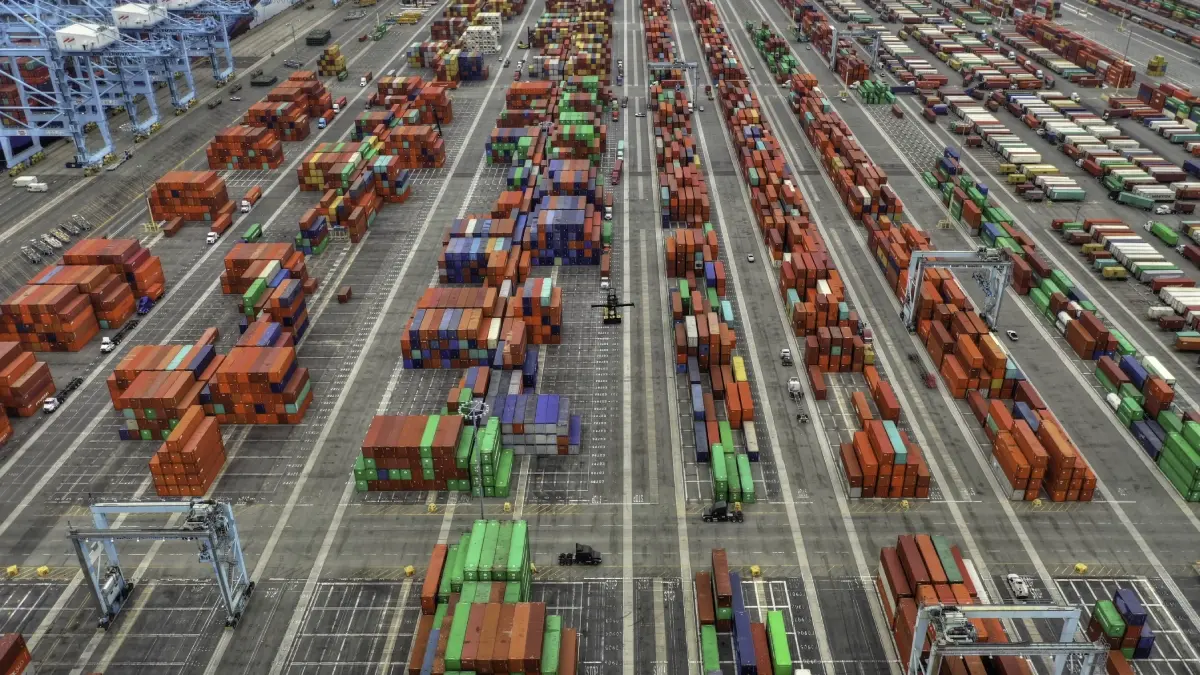


HTS classification is the process of assigning an imported product to the appropriate provision in the Harmonized Tariff Schedule of the United States (HTSUS).
The HTS is the U.S. tariff classification system used to identify imported merchandise for customs, duty, quota, and statistical purposes. It is based on the international Harmonized System (HS). The U.S. International Trade Commission (USITC) publishes the HTS, while CBP administers and enforces it for imports.
The HTS has a hierarchical structure:
The first six digits are based on the international HS nomenclature. The 8- and 10-digit levels reflect U.S. tariff and statistical requirements. USITC explains that the legal tariff provisions generally extend through the 8-digit level, while the 10-digit statistical reporting number adds the statistical suffix.
The terms HS code and HTS code are often used interchangeably, but they are not identical.
| Classification level | Purpose |
|---|---|
| 2 digits | HS chapter |
| 4 digits | HS heading |
| 6 digits | International HS subheading |
| 8 digits | U.S. HTS legal tariff provision |
| 10 digits | U.S. statistical reporting number |
The international HS provides a common classification framework across participating countries. Each country can then develop its own tariff schedule beyond the internationally harmonized six-digit level.
For U.S. imports, businesses therefore need to work with the applicable HTSUS provision, not simply stop at a six-digit HS code.
HTS classification affects how imported merchandise is treated when it enters the United States.
A classification can influence:
The classification itself is also important because tariff treatment is tied to the merchandise covered by a particular HTS provision.
CBP notes that the duty rate for a product depends on the information provided about the merchandise, and that properly determining classification can require detailed product knowledge.
For businesses with large product catalogs, maintaining accurate classifications is therefore an ongoing compliance responsibility rather than a one-time lookup exercise.
Understanding the hierarchy is essential before attempting an HTS classification.
Consider a simplified structure:
Chapter → Heading → Subheading → U.S. tariff provision → Statistical suffix
Each level narrows the description of the merchandise.
The USITC describes the HTS as a hierarchical system in which classification begins by identifying the appropriate four-digit heading and then moving through the subordinate provisions.
A chapter provides a broad product category.
For example, Chapter 84 covers machinery and mechanical appliances and parts thereof.
A four-digit heading narrows the category.
The six-digit level provides additional detail and is part of the internationally harmonized HS structure.
The U.S. further subdivides products at the eight-digit level, where tariff rates are assigned.
The final two digits generally provide statistical reporting detail. The complete 10-digit number is used for U.S. import entry reporting, but the statistical suffix itself is not part of the legal tariff text.
HTS classification is not simply a keyword search.
The classification process involves applying the General Rules of Interpretation (GRIs), relevant section and chapter notes, heading and subheading descriptions, and applicable U.S. rules.
The USITC specifically states that classification must be performed according to the General and Additional U.S. Rules of Interpretation.
A practical classification workflow looks like this.
Start with the product itself, not the code.
Useful information may include:
CBP advises importers to provide a full and complete description of merchandise, including information such as composition and intended use when seeking classification assistance.
The more technically complex the product, the more important this information becomes.
Use the product information to identify potentially relevant chapters.
Do not assume that the product's commercial name determines its tariff classification.
A product marketed as a "smart controller," for example, could potentially require analysis of its actual function, construction, and characteristics rather than simply matching the word "controller" to a tariff description.
After identifying potentially relevant chapters, examine the four-digit headings.
This is an important stage because the classification path becomes narrower as you move down the hierarchy.
The USITC recommends starting with the most specific four-digit heading that describes the merchandise and then examining the subordinate provisions under that heading.
The GRIs provide the framework for determining classification.
Classification should not be based solely on which tariff description appears to match a product's name.
The applicable rules and legal notes must be considered together with the heading and subheading language.
For difficult products, this can involve examining:
The USITC's HTS guidance emphasizes that the applicable legal provisions and notes must be reviewed when classifying goods.
Once the appropriate heading is established, work down through the relevant subheadings.
The key principle is consistency with the tariff hierarchy. A subordinate provision should be evaluated within the scope of the heading selected.
The USITC describes this as a hierarchical process in which potentially applicable headings are compared first, followed by subordinate provisions at the appropriate indentation level.
After reaching the appropriate six-digit HS subheading, continue through the U.S.-specific provisions.
This is where a global HS code becomes a U.S. HTS classification.
The final classification should correspond to the applicable provision in the current HTSUS.
Classification and duty calculation are closely related, but they are not the same thing.
Once the classification is established, review the current HTS for the applicable duty treatment and any relevant tariff programs or provisions.
The HTS contains general and special duty rates, with special rates potentially applying when the merchandise meets the relevant legal requirements.
This means a company should not assume that knowing an HTS code alone automatically determines the final amount payable.
A classification decision should be supported by the information and reasoning used to reach it.
Documentation can include:
This becomes particularly important when multiple teams or business units classify similar products.
The required information depends on the product, but classification teams commonly need a combination of commercial and technical data.
| Product information | Why it matters |
|---|---|
| Product description | Establishes what the merchandise is |
| Material or composition | Can distinguish between tariff provisions |
| Function | Helps determine the relevant classification |
| Technical specifications | Important for technically complex goods |
| Intended use | May affect classification in certain cases |
| Product configuration | Different configurations can have different characteristics |
| Components or parts | Important for products imported as assemblies or sets |
| Country of origin | Relevant to tariff treatment and additional measures |
| Product literature | Helps support the classification rationale |
| Previous rulings | Can provide relevant classification precedent |
Incomplete product information is one of the practical reasons classification can become difficult.
A description such as "industrial equipment" may not provide enough information to determine the appropriate tariff provision. A classification analyst may need to know what the equipment does, how it operates, its technical specifications, and how it is presented at importation.
Even experienced teams can encounter classification problems when product data, tariff information, and classification decisions are managed separately.
A commercial product name does not necessarily correspond to the legal language of the HTS.
Classification should be based on the applicable tariff provisions and the characteristics of the merchandise.
A six-digit HS code may identify the international classification, but U.S. import entries generally require the applicable 10-digit statistical reporting number.
The notes can be critical to understanding the scope of a heading or subheading.
Ignoring them can lead to an incorrect classification path.
The HTS is periodically amended. The USITC maintains current revisions as well as an archive of historical HTS editions.
A classification that was correct previously may require review when the tariff schedule changes.
Search tools can help locate potentially relevant provisions, but classification requires interpretation.
The USITC explicitly notes that the hierarchical nature of the HTS means it is not possible to classify every product simply through an electronic search.
A code without the reasoning behind it can be difficult to defend or review later.
Different configurations, materials, functions, or product presentations can affect classification.
Companies should therefore avoid assuming that every variation within a product family automatically receives the same HTS code.
These terms describe different activities.
HTS code lookup generally means searching the tariff schedule to find potentially relevant provisions.
HTS classification involves determining which provision legally applies to the merchandise.
A lookup can be part of classification, but it is not necessarily the complete classification process.
This distinction matters for automated systems as well. A tool that simply searches descriptions may return candidate codes without adequately addressing the legal rules and product-specific facts required for classification.
When classification is uncertain, an importer can request a binding ruling from CBP.
CBP's Binding Ruling Program allows importers and other interested parties to obtain binding pre-entry decisions, including tariff classification decisions, before importing merchandise and filing entries.
CBP also maintains the Customs Rulings Online Search System (CROSS), which provides access to published customs rulings.
Binding rulings can be particularly useful when:
A ruling does not eliminate the need for accurate product information. The quality and completeness of the information provided to CBP remain important.
Manual classification becomes increasingly difficult as product catalogs grow.
A company with thousands of SKUs may have product information spread across ERP records, spreadsheets, technical documentation, emails, and individual experts' knowledge. This can make classification consistency difficult to maintain.
Trademo's Global Trade Compliance platform addresses this specific workflow with an AI-powered HS classification capability. Its product documentation describes an AI classification engine that works from chapter level through the precise dutiable HS code, applies GRI and WCO notes alongside country-specific tariff schedule rules, flags ambiguities for human review, and generates classification justification summaries.
The platform also includes a centralized Product Master that can store product descriptions, HS/HTS codes, country-specific tariff codes, compliance information, and related product metadata.
This approach can help organizations move from a fragmented classification process toward a structured workflow:
Product data → Classification analysis → Review of exceptions → Approved classification → Documented rationale
For organizations managing classifications across multiple markets, Trademo HS classification capability is designed to support multi-country HS mapping rather than treating each classification as an isolated spreadsheet exercise.
Technology alone does not replace sound classification governance. Companies should establish a process that combines accurate product information, appropriate expertise, documented decisions, and regular review.
A practical framework includes:
Maintain a consistent source for product descriptions, specifications, materials, configurations, and existing classifications.
Use a repeatable process for gathering product information, evaluating tariff provisions, reviewing exceptions, and approving classifications.
Straightforward products can follow a standard workflow, while ambiguous or technically complex products should receive additional expert review.
Keep the reasoning behind important classification decisions, not just the resulting code.
Review classifications when relevant tariff provisions, notes, or other regulatory measures change.
Products with significant duty exposure, complex configurations, or frequent regulatory changes may require more frequent review.
Published rulings can provide useful guidance, while binding rulings can provide greater certainty for specific import situations.
Before finalizing an HTS classification, ask:
This checklist does not replace the legal requirements governing classification, but it can help teams establish a more consistent internal process.
HTS classification is more than finding a number that looks similar to a product description. It requires understanding the merchandise, applying the classification rules and relevant notes, selecting the correct provision within the tariff hierarchy, and keeping the classification aligned with the current HTSUS.
For organizations managing large product catalogs, the operational challenge is equally important. Classifications need to be consistent, documented, reviewable, and maintained as product and tariff information changes.
A structured classification process, supported by reliable product data and appropriate automation, can reduce repetitive work while keeping human expertise focused on ambiguous and higher-risk cases. Trademo AI-powered HS Classification capability is designed for this type of workflow, with classification analysis, ambiguity flagging, and documented justification built into the process.