









Podcasts
Watch videos featuring supply chain experts





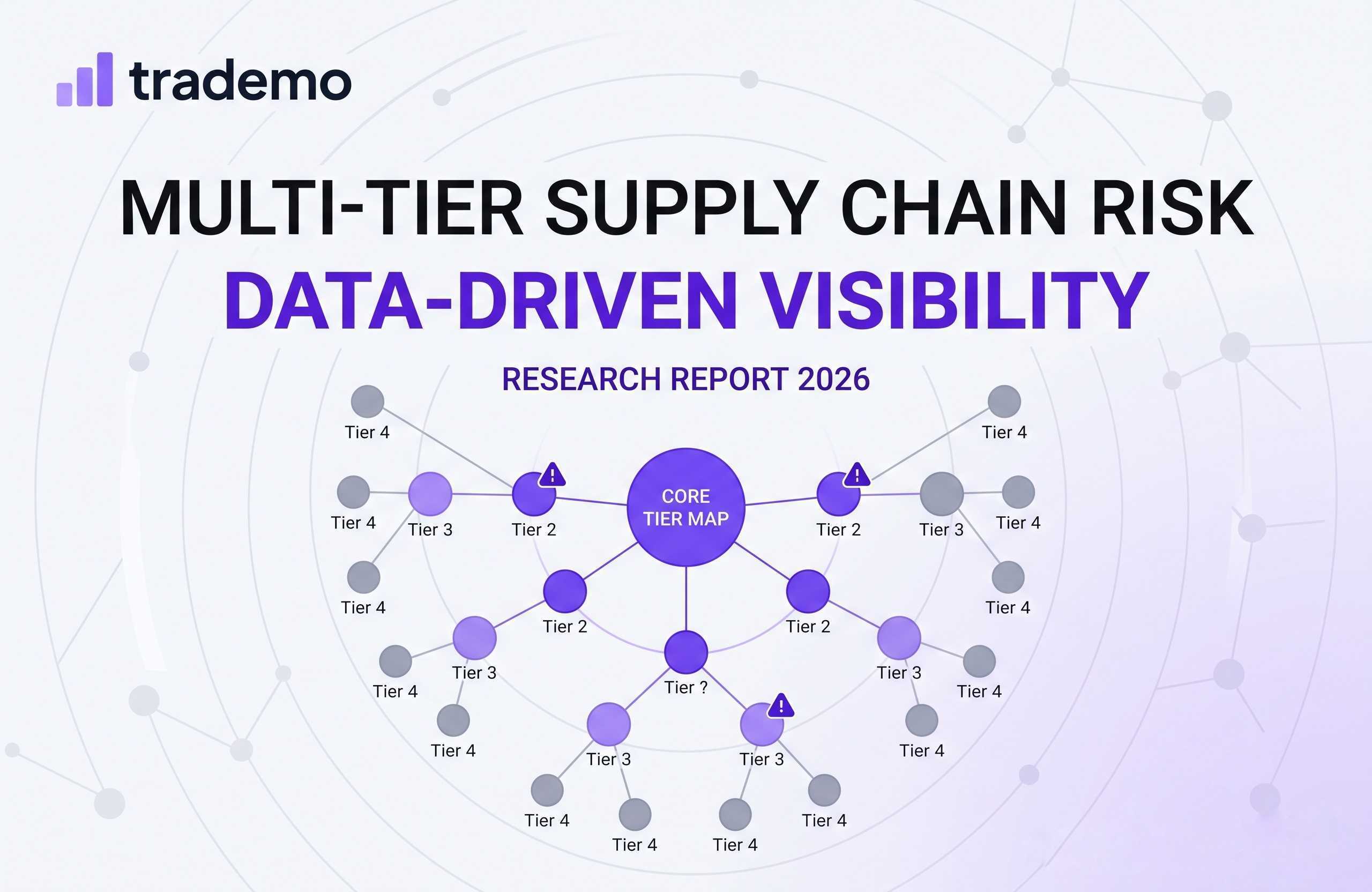
You have checked your Tier 1 supplier and the person is clean, but still your goods are subjected interrogation by US Customs. This is the reality our latest research report unpacks, and the numbers behind it should reshape how every importer thinks about compliance in 2026.
Since June 2022, CBP has stopped more than 69,400 shipment transactions worth about $3.94 billion under the UFLPA. In FY2025, only about 6.5% of stopped shipments ever entered U.S. commerce. At that release rate, it is closer to a total loss.
The report reveals why this is happening. Three regulatory systems now converge on the same demand for deep visibility: the UFLPA polices where your inputs come from, OFAC sanctions and the 50% ownership rule police the capital behind your counterparties, and export controls police where your outputs go. Answer only one of these questions and your program has two open flanks.
The data tells a counterintuitive story. Through mid 2024, more detained value carried Malaysian, Vietnamese, and Thai origin declarations than Chinese, because Xinjiang linked inputs are transformed in third countries long before they reach a U.S. port. The detention map is not the risk map. Meanwhile, OFAC added 1,322 persons to the SDN List in 2025, and BIS levied its second largest penalty ever at $252 million. Regulators are aggregating data across agencies while most corporates still screen each risk in a separate tool, against the Tier 1 counterparty only. The 2025 enforcement wave was, in large part, that data gap being monetized.
Inside the report, a live platform case study traces a U.S. apparel brand through Vietnam and Jordan to a flagged entity in China the brand had never seen, and surfaces 62 distinct suppliers at Tier 4 alone, far beyond the reach of any questionnaire. If your visibility ends at the supplier of record, your risk begins exactly where your data stops. Download the full report to see what four tiers deep actually looks like.